Your child comes home from an appointment with a new word: expander, Forsus, or Herbst. None of these sound like braces, and that is because they are not.
Parents often assume every device in an orthodontist’s office is some version of braces. It usually is not. Each one exists to fix one specific problem in how the jaw or bite is developing. Knowing which appliance is which, and why your child needs it, makes the next few months at Brookhaven far less confusing.
Dr. Stanley C. Cox is the founding doctor at Brookhaven Orthodontics. He sees these three separate orthodontic appliances often, across both the Brookhaven and Johns Creek offices. Each one solves a different problem. A Rapid Palatal Expander widens a narrow upper jaw. Forsus Springs correct an overbite while braces are already on. A Herbst Appliance moves the lower jaw forward, without headgear. This guide walks through what each one actually does, and what your family can expect day to day.
What to know before your child gets one of these appliances
- A Rapid Palatal Expander widens the upper jaw to fix a narrow palate, crossbite, or crowding.
- Forsus Springs correct an overbite while your child is already wearing braces, without headgear.
- A Herbst Appliance moves the lower jaw forward, most often for ages 9 to 14.
- None of the three depends on your child remembering to wear something. All three stay in place on their own.
- Ask Dr. Cox which appliance, if any, fits your child’s specific case at your next visit.
Which appliance treats which specific problem?
Not every child needs all three of these appliances, or even any of them. Dr. Cox decides based on what he actually finds at your child’s exam, not from a generic checklist handed out to every family that walks in. Age, jaw growth, and the specific bite problem all factor into that decision.
All three, when Dr. Cox does use one, usually show up during Phase 1 of Brookhaven’s two-phase treatment approach, the early stage most kids start around age 7 to 10. Each one targets a different structural problem, and the appliance he picks matches what he actually finds in your child’s mouth and jaw growth pattern.
Rapid Palatal Expander: widening a narrow upper jaw
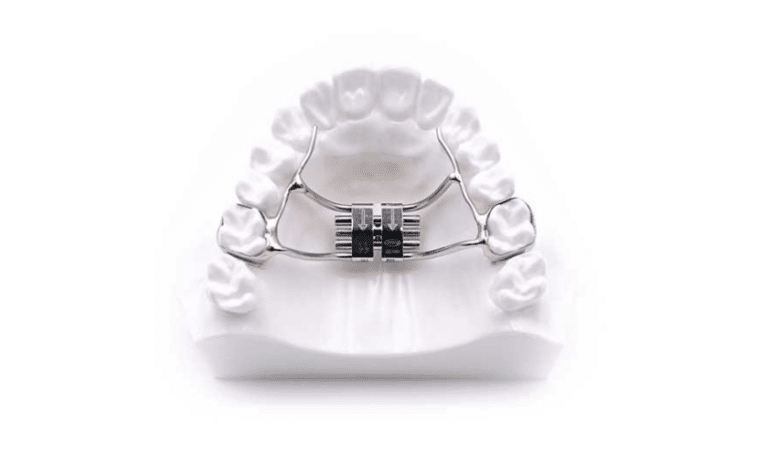
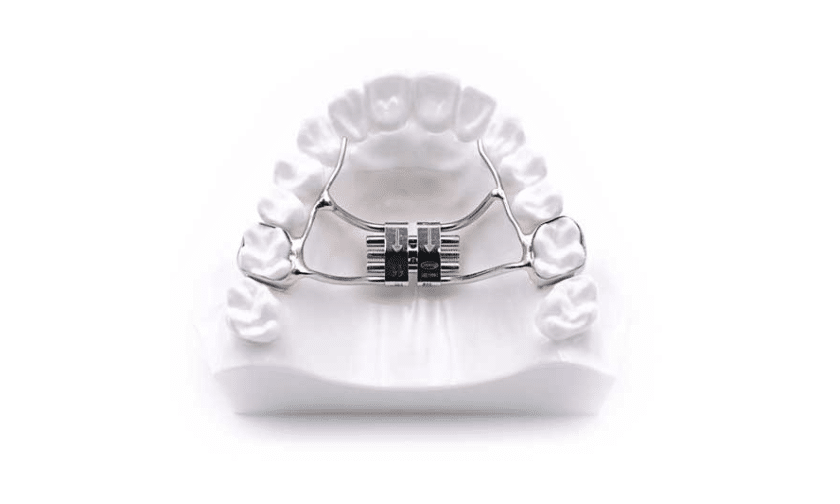
An expander is a small device cemented to the back upper teeth. It has a tiny screw in the middle. You or your child turns the screw a set number of times each week, using a key Dr. Cox provides. Each turn nudges the two halves of the upper jaw slightly further apart.
Over time, this widens a palate that is too narrow. A wider palate helps fix crossbites, crowding, and teeth that do not have room to come in on their own. Some families also notice an expander improves how a child breathes through the nose, a side benefit Dr. Cox will discuss if it applies to your child’s case.
Forsus Springs: correcting an overbite while braces are already on
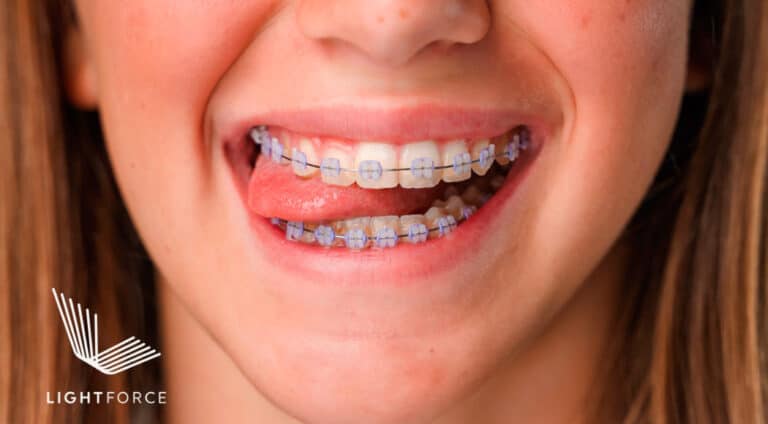
A Forsus Spring is a small spring and rod that connects an upper back tooth to the lower braces wire. It pushes the upper molars back and the lower jaw forward at the same time. Dr. Cox typically adds it partway through braces treatment, once the brackets and wires are already in place, specifically for kids with an overbite. Because the braces hold it in place, a Forsus Spring works around the clock. Your child never has to remember to put it on, unlike older headgear-style devices.
Herbst Appliance: moving the lower jaw forward without headgear
A Herbst Appliance does a similar job to Forsus Springs, but it is its own separate device rather than an add-on to braces. Metal arms connect the upper and lower jaws and hold the lower jaw in a slightly forward position. This encourages the lower jaw to grow into that new position over time. Dr. Cox typically uses Herbst for kids between ages 9 and 14, while the jaw is still growing and can respond to that guidance.
How long does each appliance typically stay in place?
Timelines vary by case, so treat these as general ranges rather than a promise for your child. Most expanders need only a few weeks of active turning. After that, the appliance stays in place for several more months, so new bone can fill in the wider gap and hold it.
Forsus Springs commonly stay on for several months of an active braces case, timed to when the overbite has corrected. Most kids wear a Herbst Appliance for eight to fifteen months. The exact time depends on how much the bite needs to move, and general orthodontic literature on the appliance supports a similar range.
Why don’t these appliances rely on your child remembering to wear something?
Older bite-correction tools, like headgear, only work if a child wears them for the recommended hours every day. All three of these appliances skip that problem, since Dr. Cox bonds or cements each one in place instead of handing it over as something removable. If your child’s case involves a deeper overbite, it is worth reading the practice’s separate post on how metal braces correct a deep bite in kids, which covers the related bite-correction work these appliances also address.
A fixed appliance keeps working whether or not your child thinks about it. That reliability is part of why Dr. Cox and Dr. Cohen-Sasson often choose one of these three over a removable alternative for younger patients, especially ones who might forget or resist wearing headgear on their own.
What day-to-day care looks like with each appliance
Brushing matters more with any of these appliances in place, since food collects around the wires and bands more easily than around plain teeth. Your child should still avoid hard and sticky foods, the same ones the practice flags for regular braces, since a stuck piece of caramel can bend a spring or crack a band.
Expect a few days of soreness or a lisp right after an expander or Herbst goes in. That usually settles down within a week or two, once your child’s mouth adjusts to the new appliance. Call the office if any wire or spring feels loose or bent, or if it starts poking your child’s cheek.
How do these appliances fit into your child’s two-phase treatment?
These appliances almost always belong to Phase 1, the early intervention stage, not Phase 2’s full braces. The goal in Phase 1 is to fix a structural problem, like a narrow jaw or a growing overbite, while your child still has growth on their side. Getting that structural work done early can make Phase 2 more straightforward later, once all the permanent teeth are in and full braces go on.
Dr. Cox’s experience across both Brookhaven locations is part of why he is often the one deciding which of these three appliances, if any, fits a specific child’s growth pattern and bite. That same judgment carries forward into Phase 2, when a different set of tools takes over.
Does getting one of these appliances hurt?
Most kids describe pressure rather than sharp pain. That pressure is usually strongest in the first few days after an appliance goes in, or right after Dr. Cox turns an expander. Over-the-counter pain relief and soft foods for a day or two usually help. The soreness is a sign the appliance is doing its job, not a sign something is wrong. Call the office if discomfort feels severe or does not ease up after the first week.
Booking a two-phase evaluation at Brookhaven Orthodontics
If your child is between ages 7 and 14 and you have questions about any of these appliances, a complimentary consultation is the fastest way to get a straight answer. Brookhaven Orthodontics offers a free first visit, including a panoramic X-ray, at both the Brookhaven and Johns Creek offices, with no referral needed.
Call or text 404-343-0677, or visit the practice’s initial consultation page to see what to expect at your child’s first appointment, and find out which of these appliances, if any, fits their case.