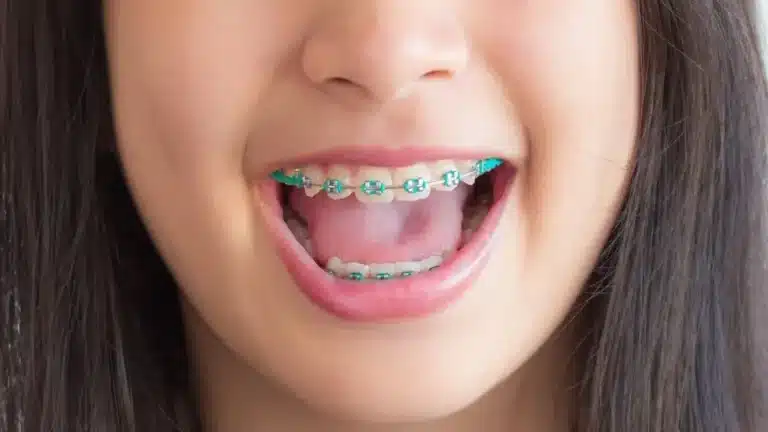
Clear braces come in more than one style. Knowing which brackets a practice uses can make a first visit easier to plan.
3M Clarity Advanced ceramic braces have translucent, tooth-colored brackets instead of metal ones. A bracket bonds to each tooth, and a wire guides the teeth into place, just as it does with metal braces. The smooth ceramic can resist staining. At Brookhaven Orthodontics, we use this system for our clear braces.
Dr. Kenneth Cohen-Sasson, an orthodontist at Brookhaven Orthodontics, spent 12 years in private practice in South Florida. He joined our Atlanta team in 2018. Teens and adults who want a less noticeable look can choose clear ceramic braces at our Brookhaven or Johns Creek office. No referral is needed.
Key takeaways if you’re comparing clear braces
- Clarity Advanced brackets bond to each tooth and join together with a wire, so the braces work around the clock.
- Ceramic braces can treat crowding, gaps, overbites, underbites, and crossbites.
- Many patients visit about every 2 months, and your treatment plan sets the exact schedule.
- The small elastic ties can pick up color from coffee and tea, so brushing after meals helps.
- Records for your treatment plan take 20 to 30 minutes and can be completed at your first visit.
How do ceramic braces differ from metal braces?
Ceramic and metal braces use the same parts and move teeth the same way. The only difference is the bracket material. Ceramic brackets look translucent and tooth-colored, and metal brackets are stainless steel. Metal braces stand out slightly more, so ceramic suits many teens and adults who want a lower profile. Both types work all day, and neither needs trays. Mild soreness often shows up for the first few days with either type, and over-the-counter pain relief usually helps. After treatment, retainers hold your teeth in their new positions.
Each patient’s needs set the appointment schedule. The braces we use often allow visits about every 2 months instead of every month. Many patients weigh ceramic against traditional metal braces before they choose. Our orthodontists will talk through both styles at your consultation.
What the Clarity Advanced bracket is made of
3M molds Clarity Advanced brackets from a fine-grained ceramic. Each bracket is small, with smooth, rounded edges. The ceramic has enough strength to guide complex tooth movements. Small elastic ties hold the wire in each bracket, and every tooth gets its own bracket.
Before we place any brackets, your orthodontist will do a digital evaluation and plan your treatment. After the brackets go on, regular visits guide your progress. Smooth edges can also feel comfortable against your lips and cheeks. Treatment time varies from patient to patient, and ceramic braces often move teeth about as efficiently as traditional braces.
Are Clarity Advanced brackets stain resistant?
The smooth ceramic can resist staining, so the brackets usually stay clear through treatment. The elastic ties work differently. They can pick up color from coffee, tea, red wine, and curry between visits. Your team typically replaces the ties at adjustment visits, about every 2 months for many patients.
Brushing after meals and flossing once a day keeps the brackets and ties looking clean, and a rinse with water after dark drinks also helps. Special floss tools help you reach around the wire, and our team will show you how to use them when your braces go on. Hard or sticky foods can damage brackets, so we will also go over which foods to skip.
Which orthodontic problems can ceramic braces treat?
Ceramic braces can treat mild to complex orthodontic problems. These include crowded or crooked teeth, gaps, overbites, underbites, and crossbites. The ceramic changes how the brackets look. It does not change what the brackets and wire can move. Your orthodontist will examine your bite and X-rays to see whether ceramic braces suit your teeth.
Ceramic braces commonly treat these concerns:
- Crowded or crooked teeth
- Gaps and spacing
- Overbites, underbites, and crossbites
- Other bite alignment concerns
If another option suits your teeth better, such as Spark aligners or LightForce braces, our orthodontists will say so. Your goals matter at the exam, whether that is a low profile, fewer visits, or trays you can remove.
Clarity Advanced and LightForce, side by side
Clarity Advanced and LightForce both use ceramic brackets, but the brackets start out differently. Clarity Advanced brackets come in standard sizes. LightForce brackets are 3D printed to match each tooth from a digital plan. Your orthodontist can explain which one fits your goals and your bite.
| 3M Clarity Advanced | LightForce | |
| Bracket design | Standard-size ceramic bracket | 3D printed to match each tooth |
| Color | Translucent, tooth-colored | Clear or white ceramic |
| How movement is guided | Wire and bracket position set at your visits | Brackets pre-programmed from a digital plan |
| Typical visit schedule | Often about every 2 months | Set by your treatment plan |
Both systems use wires and regular visits. LightForce planning happens before treatment starts, since your orthodontist designs the plan digitally and a lab prints the brackets. With Clarity Advanced, your orthodontist sets each bracket at your fitting and adjusts the wires as your teeth move. Our guide explains how LightForce 3D-printed braces work in more detail.
Who chooses ceramic braces over Spark aligners?
Patients who prefer not to manage removable trays often choose ceramic braces. Spark aligners need 20 to 22 hours of wear each day, and you take them out for meals and brushing. Ceramic braces stay bonded and work around the clock. Spark does not suit every case, so your orthodontist will tell you whether aligners fit your teeth.
Other patients like removable aligners because the trays come out for brushing and flossing. Most Spark patients also receive small attachments on their teeth that help the trays stay in place, and treatment starts with a 3D scan that shows a projected smile. Both options can work well. The right one depends on your bite, your routine, and what feels good to you.
What happens at your first visit?
Your first visit includes photographs of your face and teeth, a panoramic X-ray at no charge, and an exam with the orthodontist. When the exam points toward treatment, records come next. That step takes 20 to 30 minutes, and it can fall on the same day. Study models, photographs, and X-rays shape your plan.
Dr. Stan Cox, an orthodontist at Brookhaven Orthodontics, meets with you during the visit. Both orthodontists treat patients here, and you can read about Dr. Cohen-Sasson’s orthodontic residency before you come in. Your dentist’s name, existing X-rays, a medication list, and your insurance details all help the team prepare. Our team encourages questions at every stage, so bring as many as you like.
Clear ceramic braces in Atlanta and Johns Creek
Our Brookhaven office sits in the Town Brookhaven shopping center at 804 Town Blvd., Suite A2000, Atlanta, near Costco. Our Johns Creek office is at 3440 Old Alabama Road, Suite 200. Both offices share one number, and you can call or text 404-343-0677. Once braces are on, most appointments can fall after school, though those slots are limited.
Choosing a bracket style gets easier after you talk it through, and Brookhaven Orthodontics in Atlanta is glad to help you compare your options.
When you are ready to see which bracket suits your teeth, you can request a first visit with Dr. Cox or Dr. Cohen-Sasson. Our team is also available at 404-343-0677 for calls and texts.