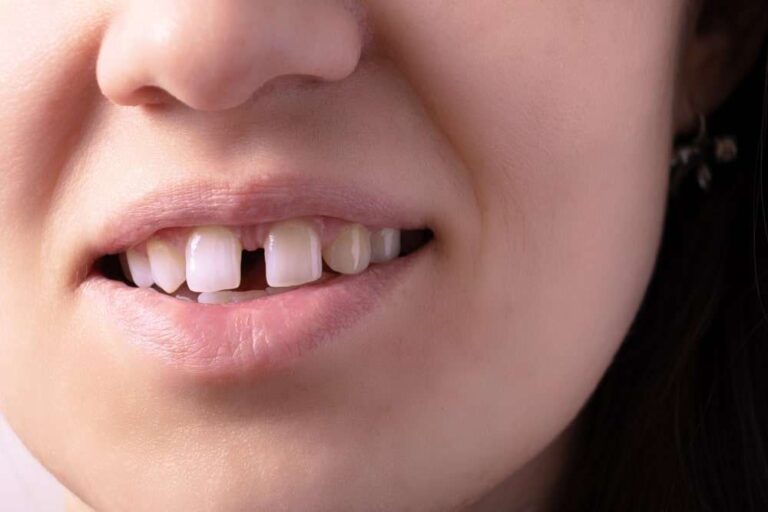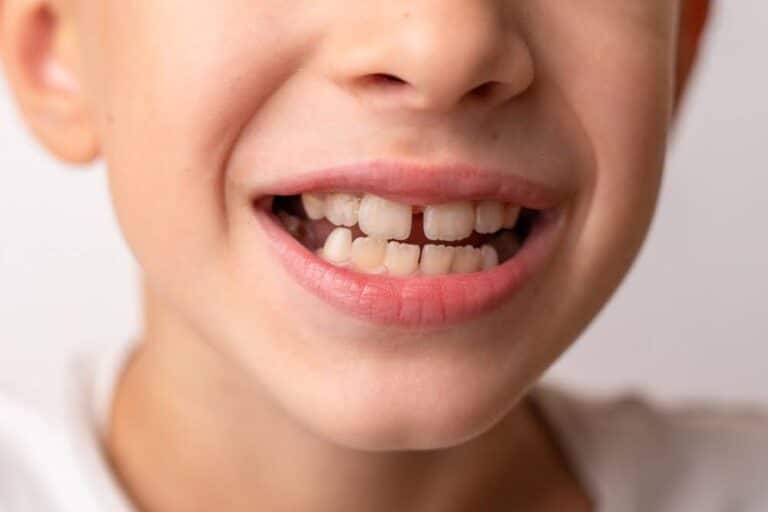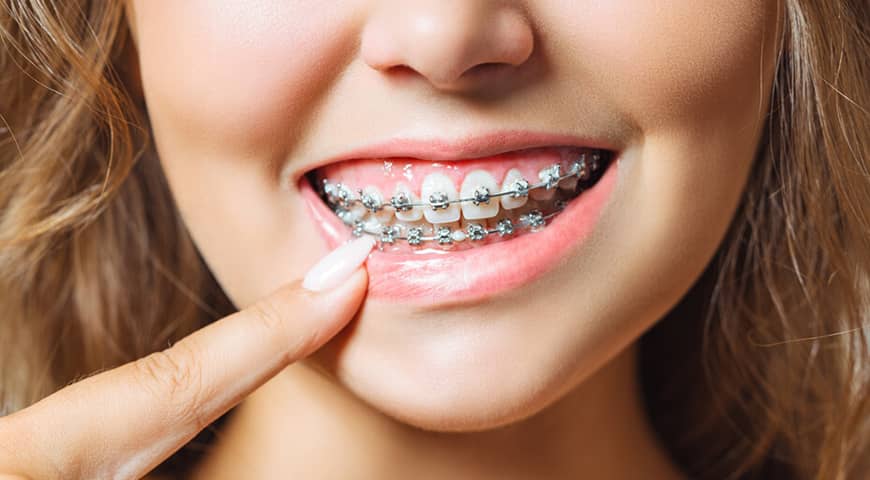
The assumption that straightening teeth almost always requires removing some of them is surprisingly common. Patients come in for consultations having already braced themselves for the idea that they’ll lose healthy teeth as part of the process. In many cases, that concern turns out to be unnecessary.
Whether extraction is needed depends on the specifics of the case: how crowded the teeth are, what the bite looks like, the size of the jaws relative to the teeth, and what the treatment goals are. There’s no universal rule that says extraction is or isn’t required. It’s a clinical determination made after a thorough assessment.
Here’s how that decision actually gets made.
Why Extractions Were Once More Common
Orthodontic practice has shifted over the past few decades. Earlier approaches to crowded teeth more routinely included extraction as a way to create space for alignment. The logic was straightforward: if there isn’t enough room, remove some teeth to make room.
More recently, a broader range of techniques for creating space without extraction has become available, and the clinical understanding of how arch development and tooth movement interact has deepened. This doesn’t mean extraction is wrong when it’s indicated. It means that in many cases, there are other options worth evaluating first.
How Space Can Be Created Without Removing Teeth
When crowding is present, and the goal is to avoid extraction, space usually comes from one of two approaches, or a combination of both.
Arch Expansion
The dental arch, the curved shape formed by the upper or lower teeth, can sometimes be widened to create additional room. In younger patients whose facial bones are still developing, expansion is often more predictable and achievable. In adults, the sutures of the palate have fused, which limits how much pure skeletal expansion is possible through orthodontic appliances alone, though some degree of dental expansion is still achievable.
At Brookhaven Orthodontics, Dr. Cox assesses whether expansion is clinically appropriate based on each patient’s jaw dimensions, facial structure, and the degree of crowding present. For cases where expansion is a viable option, orthodontic appliances can be incorporated into the treatment plan alongside braces or clear aligners.
Interproximal Reduction
Interproximal reduction, often called IPR, involves removing a small, precisely controlled amount of enamel from between specific teeth to create space. The amount removed is minimal, typically fractions of a millimetre per contact point, and is planned as part of the digital treatment plan before anything is done.
IPR is well-established in orthodontic practice and, when done within appropriate limits, does not affect the long-term health or integrity of the teeth. It’s commonly used in clear aligner treatment and can also be incorporated into treatment with braces.
When Extraction May Still Be the Right Approach
Non-extraction treatment isn’t appropriate for every case, and recommending it when the case calls for extraction leads to compromised outcomes. A few situations where extraction tends to be the more appropriate path:
Severe crowding where the degree of tooth displacement is beyond what expansion and IPR can realistically address without pushing the front teeth too far forward. Protrusion of the upper or lower front teeth where the teeth are already positioned as far forward as they should be, and moving them further to create space would affect the bite or facial profile. Significant bite discrepancies, such as a deep overbite or pronounced underbite, that are better corrected through a plan that includes strategic extraction.
The goal in any of these situations isn’t to remove teeth arbitrarily. When extraction is recommended, it’s because the space created by the extraction allows both the alignment and the bite to be corrected in a way that non-extraction treatment cannot achieve as well.
What the Assessment Involves
At Brookhaven Orthodontics, every patient begins with a complimentary consultation that includes a full clinical assessment. Dr. Cox reviews the degree of crowding, the bite relationship, the position of the teeth in the jaw, and the facial profile before recommending a treatment direction.
This is an individualized process. Two patients with similar-looking crowding may have different recommendations based on what the full picture shows. The clinic uses 3D imaging technology as part of the assessment, which provides more detailed information about tooth positions and bone structure than a standard X-ray.
Brookhaven Orthodontics | Atlanta & Johns Creek, GA
Two locations. One team. Brookhaven Orthodontics sees patients at 804 Town Blvd., Suite A2000 in Atlanta (Brookhaven) and 3440 Old Alabama Road, Suite 200 in Johns Creek. Complimentary consultations are available at both offices with no referral needed. Call or text 404-343-0677 to schedule.
Modern orthodontics offers more treatment options than ever before, allowing many patients to achieve beautifully aligned smiles without tooth extractions. The best approach depends on your unique smile, which is why a personalized evaluation by an experienced orthodontist is the first step toward achieving healthy, lasting results.